The circular-water wedgeLe coin eau circulaireA cunha de água circular
Launch water becomes community freshwater.
L'eau de lancement devient eau douce communautaire.A água de lançamento torna-se água doce comunitária.
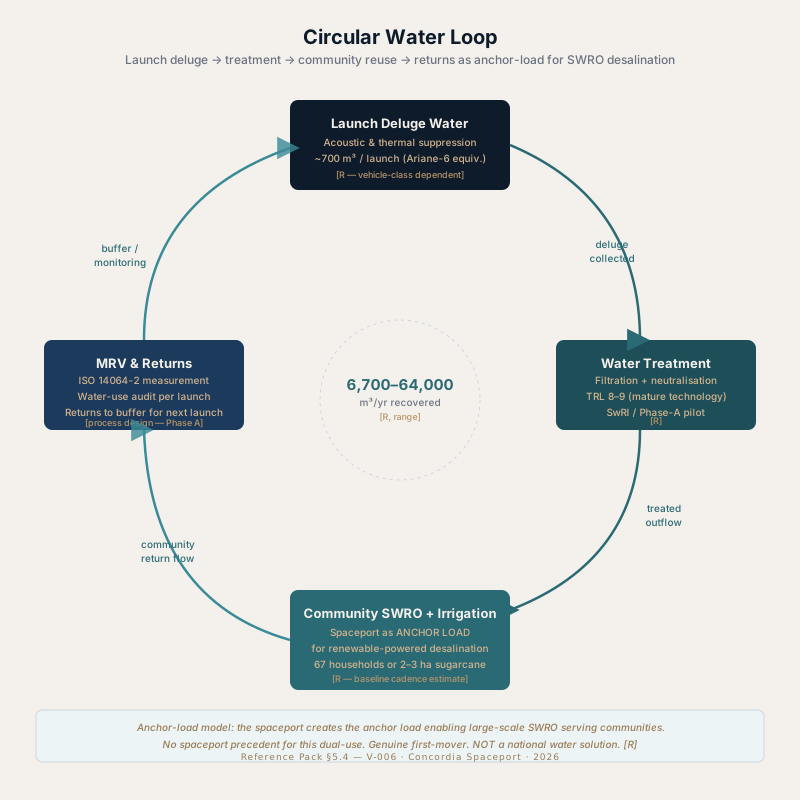
Concordia Spaceport's deluge and acoustic-suppression system requires large volumes of water per launch — primarily for sound dampening, not fire suppression. That water is recovered, treated via a TRL 8–9 treatment train, and returned as freshwater for community use and irrigation. At baseline launch cadence, estimated recovered volume is 6,700–64,000 m³/yr. The real value is the spaceport-as-anchor-load: by functioning as guaranteed demand, it enables a larger renewable-powered desalination system to be financed — one that serves communities well beyond what the spaceport alone needs. This is not framed as a national water solution. Cabo Verde's existing national desalination infrastructure already serves ~66% of freshwater needs. The circular-water model is a proof-of-concept anchor, not a substitute.
Le système de déluge et de suppression acoustique de Concordia Spaceport nécessite de grands volumes d'eau par lancement — principalement pour l'amortissement acoustique, pas la suppression d'incendie. Cette eau est récupérée, traitée via un train de traitement TRL 8–9, et restituée comme eau douce pour usage communautaire et irrigation. Au rythme de lancement de base, le volume récupéré estimé est de 6 700 à 64 000 m³/an. La vraie valeur est le spaceport comme charge d'ancrage : en fonctionnant comme demande garantie, il permet de financer un système de dessalinisation plus large alimenté par les renouvelables — un système qui sert les communautés bien au-delà de ce dont le seul spaceport a besoin. Cela n'est pas présenté comme une solution nationale de l'eau. L'infrastructure nationale de dessalinisation existante de Cabo Verde sert déjà ~66% des besoins en eau douce. Le modèle eau circulaire est une preuve de concept d'ancrage, pas un substitut.O sistema de dilúvio e de supressão acústica do Concordia Spaceport requer grandes volumes de água por lançamento — principalmente para amortecimento acústico, não supressão de incêndios. Essa água é recuperada, tratada através de um comboio de tratamento TRL 8–9, e devolvida como água doce para uso comunitário e irrigação. No ritmo de lançamento de base, o volume recuperado estimado é de 6.700 a 64.000 m³/ano. O valor real é o spaceport como carga âncora: ao funcionar como procura garantida, permite financiar um sistema de dessalinização maior alimentado por renováveis — um sistema que serve as comunidades muito além do que o spaceport por si só necessita. Não é apresentado como uma solução nacional de água. A infraestrutura nacional de dessalinização existente de Cabo Verde já serve ~66% das necessidades de água doce. O modelo de água circular é uma prova de conceito âncora, não um substituto.
6,700–64,000
m³/yr community freshwater at baseline cadence [R — range across research engines]eau douce communautaire au rythme de base [R]água doce comunitária no ritmo de base [R]
TRL 8–9
water treatment technology — mature, commercially proventechnologie de traitement de l'eau — mature, commercialement prouvéetecnologia de tratamento de água — madura, comercialmente comprovada